What is Visualisation?
Think of visualisation as a form of mental rehearsal. The goal is to produce a specific outcome with our mental energy, by focusing on what we would like to experience. Evidence demonstrates that our mind plays a vital role in creating our experience, making visualisation exercises a way to program the mind for a better experience. Subconsciously, we naturally practice visualisation in our general day to day thought patterns, however the process is now being practiced and directed for those that would like to channel their consciousness towards a particular result.
Who Uses Visualisation Techniques?
According to the Telegraph, Wayne Rooney, Mohammed Ali, Andy Murray, Jessica Ennis-Hill and Jonny Wilkinson actively visualised their success before experiencing it.
For Wayne Rooney, the practice of visualising his sporting success was something he did naturally and has honed in on since he was a kid.
“For Rooney, this use of imagery – the act of creating and ‘rehearsing’ a positive mental experience in order to enhance your ability to achieve a successful outcome in real life – is an instinctive method honed since childhood” – Telegraph.
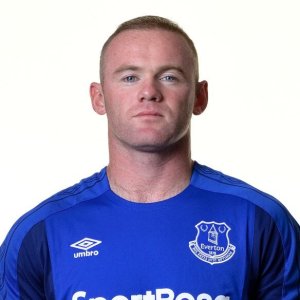
Rooney claimed “I lie in bed the night before the game and visualise myself scoring goals or doing well,” he once revealed. “You’re trying to put yourself in that moment and trying to prepare yourself, to have a ‘memory’ before the game. I don’t know if you’d call it visualising or dreaming, but I’ve always done it, my whole life”.
MMA fighter Conor McGregor, an open believer in the concept of the Law of Attraction, and an athlete that oozes complete confidence in his athleticism, states that his ability to envision his success and focus on the positive, especially in times of struggle, is what drives him forward. McGregor stated in an interview: “If you have a clear picture in your head that something is going to happen and a clear belief that it will happen no matter what then nothing can stop it. It is destined to happen. It’s perfect”.

By his own admission, McGregor uses the concept of Law of Attration for winning, and describes himself as like a kid in regards to how he uses his imagination. McGregor, who has had a sports psychologist work with him since 2009, added in an interview “I see myself as the champ already. I visualise everything; I visualise this conversation, I visualise the walk out, I have the shots picked out. If you see it in your head, you see it before your eyes”. To watch highlights of interviews with McGregor, click the link here.
Is It Effective?
Through visualisation, true belief in your ability to succeed can be created. Without that underlying belief in place, true success won’t be achieved or maintained, as experience is created within the mind first. If we can imagine our desired outcome as a true possibility within or mind, then this can unconsciously (or consciously) influence our action towards achieving this result.
The effects of visualisation are psychological, neurological and physiological. The Huffington Post states that: “according to research using brain imagery, visualization works because neurons in our brains, those electrically excitable cells that transmit information, interpret imagery as equivalent to a real-life action. When we visualize an act, the brain generates an impulse that tells our neurons to “perform” the movement. This creates a new neural pathway — clusters of cells in our brain that work together to create memories or learned behaviors — that primes our body to act in a way consistent to what we imagined”.
Evidence demonstrates that there is a strong connection between the mind and body, with studies on brain imagery demonstrating that visualising an exercise lights up many of the same regions of the brain that are employed when the body engages in that exercise. According to Psychology Today: “a study looking at brain patterns in weightlifters found that the patterns activated when a weightlifter lifted hundreds of pounds were similarly activated when they only imagined lifting”. The article also referenced a study using two control groups, one of which would weight lift at the gym whilst the other would practice mental exercises. The gym group had a 30% increase in muscle mass, whilst the mental imagery group had an increase of 13.5%. This means that both a physical and mental practice would increase the likelihood of athletic success, rather than rely solely on one method, the two would compliment one another.
How Do You Practice
- Think of the brain as a muscle, that gets stronger with practice. Using mental imagery effectively is a skill in its own right, which gets better with training.
- Visualise content that meets your needs in some way. For instance, if you find that nerves and anxiety influences your performance, then visualise yourself performing with a smooth, effortless and natural confidence. If you need to improve your ability to tackle effectively, then imagine yourself successfully winning tackles. If there are certain moves or exercises you need to improve, imagine yourself performing what ever it is, with natural efficiency and success.
- Make your imagery as vivid as possible, using all of your senses, visual, auditory, touch, etc. Imagine all the little details, such as the set up of the environment, the energy of the crowd, the cheers, the colour of your sports uniform and that of your opponent or opponents team, and so forth.
- Begin your mental imagery practice by visualising high quality images for short periods of time, then gradually start to build upon the time and detail in your visualisation practice.
- Get into the habit of practicing mental visualisation/rehearsal regularly. Even if you only catch a couple minutes whilst on a train, in a queue or whilst driving somewhere. Direct your thoughts towards a positive mental focus.
- There are two ways to practice visualisation. The first is outcome visualisation, which involves you visualising your achievement of a goal. The second type is process visualisation, which involves you envisioning all the different actions you’d need to take, to achieve the overall goal. Practice both.

 Lydia Lacey Fitness