4 Effective Ways To Overcome Social Anxiety

Social anxiety can be described as a fear of interacting with other people due to an overly self-conscious mindset, one that is rooted in a insecurity of being negatively judged by others.

As a yoga teacher with a background in psychology, I’m going to combine my knowledge on these two areas to provide you with the four methods below.

Breathe properly

When you’re starting to feel antsy, and your heart rate and body temperature goes up, if you take this moment to reflect on your breathing pattern, you’ll notice that your breathe has become short and erratic, you’ve developed this quick “in & out rhythm”. What happens here, is that your rapid breathing pattern is sending signals to your body that you’re in a “fight or flight” situation and your body is responding by producing stress hormones, such as cortisol and adrenaline. This amps your heart rate and body temperature up! So what happens when you breathe slowly and deeply? The exact opposite – you dampen your body’s production of stress hormones AND you relax your nervous system. Think of it this way, your breath influences your physiology, which in turn influences your emotions, so control your breathing!

If you’d like to understand more on how breath influences physiology and what kind of breathing exercises you could practice, click the link here “Dealing With Anxiety Through Meditation”.
just-breathe

Focus your attention on the other person

When people get nervous in social situations, their attention is directed inwards – towards themselves and how they are being perceived. What does this demonstrate? That’s social anxiety is a form of self-absorption! You become so enamored with your feelings of self consciousness that you’re no longer mentally present in the moment, your attention is on yourself – not the other person (or people).
If you’re not mentally present in the social interaction, then you cannot properly contribute to the discussion. You simply won’t be in sync with the theme of the chat.

So listen intently, to what the other person is saying. Look at how they communicate with their body language and facial expressions. Become consumed in what they’re saying, because once your attention is shifted away from your own self-conscious thoughts, towards the other person, your mind won’t get the chance to indulge in its anxious thinking.

Stand up straight and make eye contact

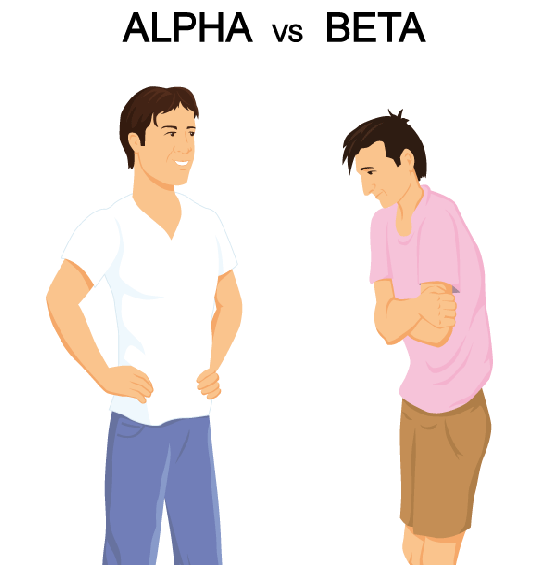
Don’t stand in a way that makes you look and feel weak. How you carry yourself – your body language has a strong influence on your hormone levels, which again affects your mood. Standing in a typical alpha male stance (see below) causes your body to produce testosterone, which in turn impacts your confidence levels whilst dampening your body’s production of stress hormones. Confident body language also influences your body’s levels of serotonin, a hormone that regulates positive emotion (serotonin levels are high in naturally dominant personality types).

Standing or sitting in a way that makes you look small, whilst avoiding eye contact conveys weakness. Think of it this way, you don’t want to communicate your insecurities via your body language, so make the conscious effort to stand/sit up straight and make proper eye contact.
alpha-beta-body-language

Adopt a “care less” attitude

Probably the hardest yet most effective method of tackling social anxiety. If you’re not self conscious of what other people think of you in a social interaction, what is the likelihood of you getting nervous in the first place? This doesn’t mean you stop caring completely about how you conduct yourself in social situations, you can still want to improve your social skills yet hold a level of detachment to how people perceive you. There will always be people out there that take a disliking or disinterest towards you, even when you present yourself in your best form, so don’t take every knock back personally. Develop thicker skin, and just think “fuck it”. Identify where you might have gone wrong and improve yourself in that area with practice. Don’t get caught up in how you wish something went, you can’t change that – you can only try and improve your character through trial and error.

Lao Tzu

Summary

The best way to overcome social anxiety is to practice socially interacting, practice it to the point you gradually become desensitized to the act. Reflect on what frightens you the most, whether it’s large group settings, speaking to someone you’re attracted to or the opposite sex – then expose yourself to those scenarios repeatedly, practicing the methods above (this is how your character grows). However much that idea frightens you, the short term consequences of feeling awkward certainly out weigh the long term consequences of growing old with poor social skills. The older you get, the less cute it gets – that’s the harsh truth of it. Trying to ween out social anxiety from your personality will be one of the most rewarding things you can do, because it’s not a characteristic that is going to enhance your life in anyway.

Practice makes perfect, so try and have fun whilst you practice. You’re not going to bash out an ingrained behavior overnight. Keep pushing forward nonetheless!
Dealing With Anxiety Through Meditation

Written by Lydia Lacey

I was about 17/18 years old when I first started practicing yoga, after experiencing a debilitating lower back injury through martial arts, my physiotherapist recommended I take up the practice. After a few sessions, the pain from my injury completely subsided and I was officially hooked to my yoga practice. Initially however, I never really paid attention to the breathing element of yoga and I had absolutely zero interest in meditation. Reflecting back on my younger narrow-minded self, I associated breathing techniques and meditation as something that only weed smoking hippies dressed in psychedelic patterns would practice – not something I considered cool back then!

It wasn’t till a couple years later that I was open to the idea of practicing meditation or breathing exercises. As a natural over-thinker prone to anxiety – incorporating meditation into my routine really was life changing. Better late than never!

The basis behind yogi breathing

The idea behind breathing techniques is that you can control your state of mind with the flow of your breath. The mind, body and breath are intimately connected, so our thoughts and physiology can be influenced via our breathing pattern (this has been scientifically proven too). If you think about people that suffer from stress or anxiety, you’ll notice that in their most anguished states, these people suffer from a short, sharp and erratic breathing pattern. So in times when your emotions get the best of you, pause and take a moment to acknowledge your breathing, and remind yourself that you can take back control over how you’re feeling by simply slowing down and expanding your breath. This can switch off the panic or stress response we have built in our minds, as slow breathing has a calming effect on our nervous system.

Think of it this way, your mind is either the key to happiness and bliss or the barrier to it. Your mind can be either productive or destructive. There is no source outside of you that is responsible for how you feel and respond to situations. Once you recognise this reality, you empower yourself to change your mind and your state of emotions.

yoga-breathing-6

How breathing influences your physiology

Slow, deep breathing can in moments of stress switch us from the sympathetic (fight or flight response), to the parasympathetic nervous system (relaxation response). In moments of intense panic, anxiety or stress, the sympathetic nervous system sends signals through the automated nerves to the adrenal glands, which produce adrenaline. Adrenaline causes the heart rate to increase and the breathing to become more rapid. This is exactly the opposite of what you want to achieve during bouts of anxiety and stress. By breathing rapidly, you are confirming to your body that you are in a state of stress, and your body will respond by releasing the hormones relative to your current state of being. It’s a destructive circle that can easily spiral downwards at the worse moments.

Fortunately however, we are not helpless to this process. By taking deep breaths, we can start to slow down and reverse this response in moments of anxiety by dampening our body’s production of stress hormones. By stimulating the parasympathetic nervous system, we bring ourselves into a relaxed state of being, both physically and mentally.

By voluntarily changing the rate, depth, and pattern of breathing, we can change the messages being sent from the body’s respiratory system to the brain. In this way, breathing techniques provide a portal to the autonomic communication network through which we can, by changing our breathing patterns, send specific messages to the brain using the language of the body, a language the brain understands and to which it responds. Messages from the respiratory system have rapid, powerful effects on major brain centers involved in thought, emotion, and behavior.

just-breathe

Taking control of your breath

So the breathing pattern I practice at home (and teach at my yoga classes) goes like this:
Inhale in through the nose and exhale out through the mouth. Once you get into this flow after a few breaths, start to invite your inhalations down a little bit deeper while simultaneously slowing down your breath.

Then when you’re ready, start to follow your exhalations all the way through to the end, so there is no more air to expel from the body. This will naturally create space within the lungs for a fuller breath of fresh air by ejecting any stagnant oxygen from within the body. Following this complete exhalation, take a deep inhalation once again in through the nostrils and this time; try to inhale slowly to your full lung capacity as you inhale past the chest, into the lower stomach. As you take these deeper breaths, think of it as you’re trying to fill all of that lung space by inhaling fully.

So now, continuing with this deep breathing pattern, start to slow your breathing rate down to 3-4 seconds for both your inhalations and for your exhalations. During this time frame, you are both inhaling fully on your inhalations and exhaling completely on your exhalations.

Generally, our breathing doesn’t tend to go past the chest area in our regular day to day breath, but when you breathe deeply and fully, your stomach, chest and collarbones will start to expand and rise as it fills with oxygen.

Final Thoughts

I never realised until I started practicing meditation, the ways in which overthinking and anxiety could restrict you in so many areas of life. From limiting my interaction in social settings to preventing me from making bold leaps in the right direction with my career, to simply causing me unnecessary worry. Anxiety at its worse steals your peace away from the present moment, often blocking suffers from progressing forward in many areas of their lives too.

Daily meditation makes you all the more reflective on where your own overthinking and negative thought patterns are really the only things that are holding you back. Deep breathing exercises in moments of anxiety, worry and/or panic can enable you to restore a sense of calamity into your state of mind and emotions, putting you in control over how you feel at any given time.